Baltimore: The City of Accessible Arts (BCAA)
Baltimore: The City of Accessible Arts aims to transform Baltimore into a city of accessible arts. Essential to this Baltimore-based consortium is the creative leadership of disabled artists and community members, working in close collaboration with museums, galleries, art spaces, and Baltimore organizations serving disabled adults and youth.
The Arc Baltimore is the fiscal sponsor for BCAA.
Baltimore: The City of Accessible Arts (BCAA) Narrative
Background: Baltimore: The City of Accessible Arts aims to transform Baltimore into a city of accessible arts. Essential to this Baltimore-based consortium is the creative leadership of disabled artists and community members, working in close collaboration with museums, galleries, art spaces, and Baltimore organizations serving disabled adults and youth.
Disabled visitors and artists should expect and rely on comprehensive accessibility—not just ramps and accessible bathrooms, but inclusive features such as accessible displays, audio description, amplification tools, assisted listening tools, ASL interpretation, live captioning, plain language, tactile exhibits, Braille, QR codes, floor guides, quiet spaces for decompression, and resting benches.
As we’ve learned over many years, these accommodations and universal design features were initially developed and executed to benefit people with disabilities, but they ultimately benefit all. Our city belongs to all of us when arts environments and programs commit to and broadcast inclusivity and belonging. Building on a legacy of civil rights work in schools and communities, this Baltimore-based project, rooted in disability justice and led by adults with disabilities, aims to collaborate with national and international arts partners in breaking down barriers to access.
This project originated from the Elizabeth Talford Scott Community Initiative (ETSCI), which concluded in the summer of 2024. This citywide initiative, led by curator George Ciscle, featured nine concurrent exhibitions of Scott’s artwork, all centered on accessible exhibition design. At its conclusion, six participating museums—RFLM, The Peale, Walters, MCHC, BMA, and JELMA—committed to continuing this work and enhancing their capacity for accessible exhibitions.
Feasibility Study: To maintain connections, advance discussions on exhibition design, accessibility features, and inclusive practices, and to determine interest and need, BCAA held monthly hybrid convenings with previous and new institutional partners between July 2024 and December 2025. These open and constructive discussions foster a citywide commitment to accessible exhibition design, offering valuable opportunities for learning, dialogue, and meaningful improvements.
Anticipated Results: BCAA, led by disabled artists and consultants, collaborates with museums, galleries, and community organizations to advocate for the rights of adults with disabilities and older youth. Its Leadership Team, composed of three disabled experts in disability justice and the arts, identifies barriers related to disability, race, class, and language that limit participation. With fiscal coordination from The Arc Baltimore, the initiative positions Baltimore as a national leader in accessibility.
From July 2024 to the present, BCAA-led convenings and field trips fostered trust, assessed accessibility, and identified barriers to accessibility. Through cross-disability, multiracial, and intergenerational organizing, disabled adults have facilitated training and dialogue, setting the stage for a Public Convening
Ongoing discussions with disabled artists and community members refine accessibility needs. The Leadership Team hires consultants with diverse disabilities—including low vision, hearing impairments, autism, mental health challenges, and intellectual disabilities—who contribute lived expertise to improve exhibitions, programs, and events.
Public Convening: All of these activities and efforts to organize came together on July 11, 2025, at the Enoch Pratt Free Library Central when BCAA organized its first day-long Public Convening bringing together museums, public art spaces, artists with disabilities, and disability-focused organizations to explore inclusive practices. By centering the voices of disabled people, the event modeled best practices in accessibility, propelling Baltimore toward becoming the City of Accessible Arts.
Two hundred and eighty-five people attended this hybrid event, which was streamed online in addition to hosting many in-person attendees. Marguerite Woods led a training for volunteers to act as talking signs for blind attendees. The event featured a range of speakers and events, including a film screening of Alycia Cunningham’s “Seeing Without Sight,” a film that models the ways that artists can incorporate visual description into their work, artist talks by disabled artists, and presentations by arts administrators and social service organizations. The convening also featured an exhibition of works by disabled artists, organized in partnership with Make Studio and Visibility Arts Lab. Like the monthly convenings, this event included a range of accessibility options, from a hybrid option, to ASL interpretation, audio description, live captioning, sensory breaks, a quiet room, and visual description.
YouTube Recording:Baltimore: The City of Accessible Arts Presents Public Convening, July 11, 2025
Deliverables
● On-going information and accessibility resources for museums and arts spaces.
● Paid employment for individuals with intellectual, physical, and developmental disabilities.
● Expanded audiences of people with disabilities, enhancing access to Baltimore’s cultural institutions.
● A full-day hybrid public convening at the Enoch Pratt Central Library.
● A multi-year vision including:
● A fund to promote accessibility solutions.
● Paid employment for people with disabilities.
● Promoting leadership of disabled Black artists and community leaders.
● Training on disability justice, inclusion, and accessibility for arts professionals.
● Opportunities for museums and galleries to hire disabled consultants to inform practice toward accessible exhibitions and programs.
● In-person and virtual planning meetings with arts organizations.
● Expanded outreach to youth and disability and accessibility organizations across Baltimore.
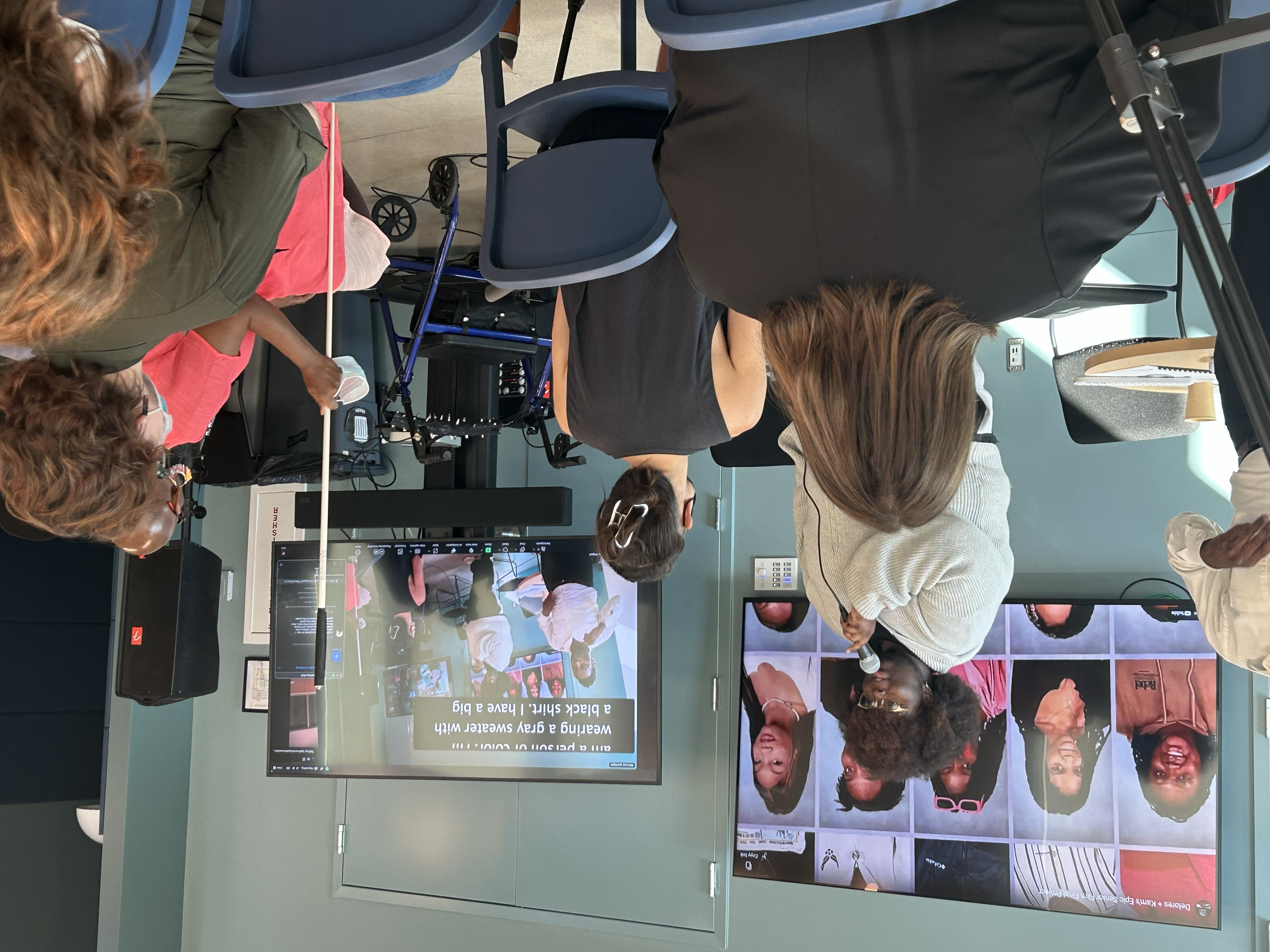
Wide Ange Youth Media Convening
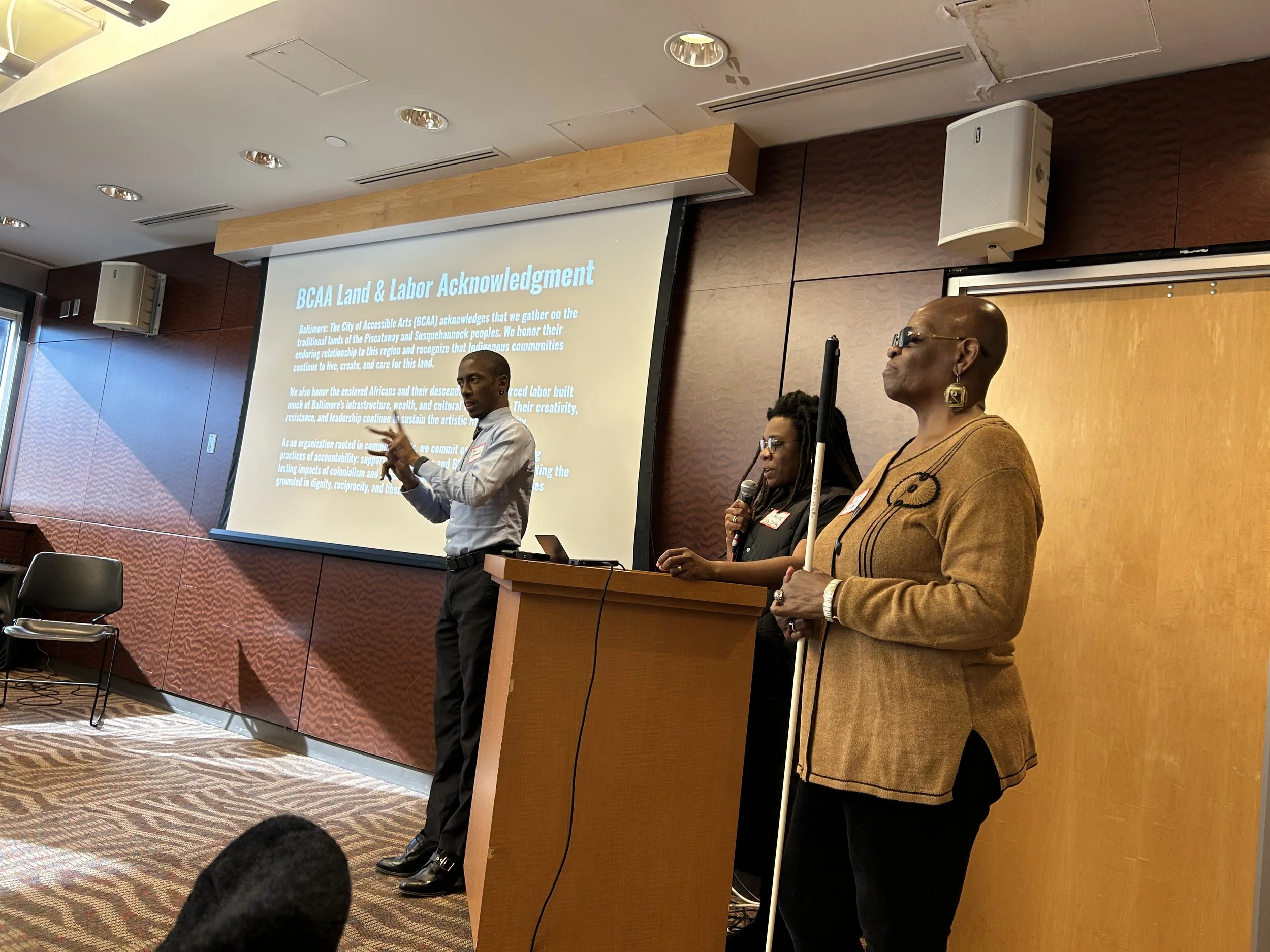
Reginald F. Lewis Museum(RFLM) Convening
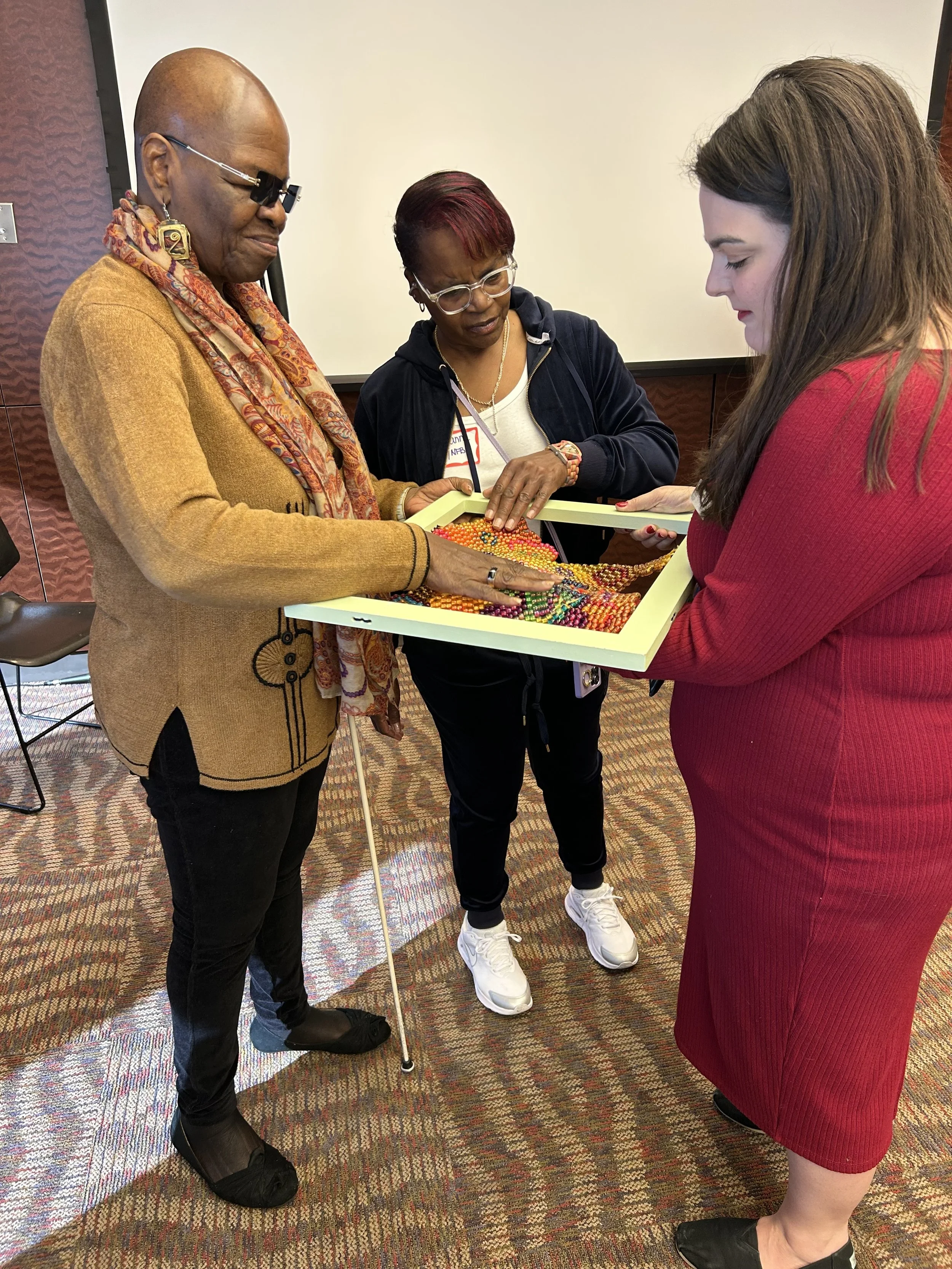
Touch Sample of Joyce Scott beadwork at RFLM
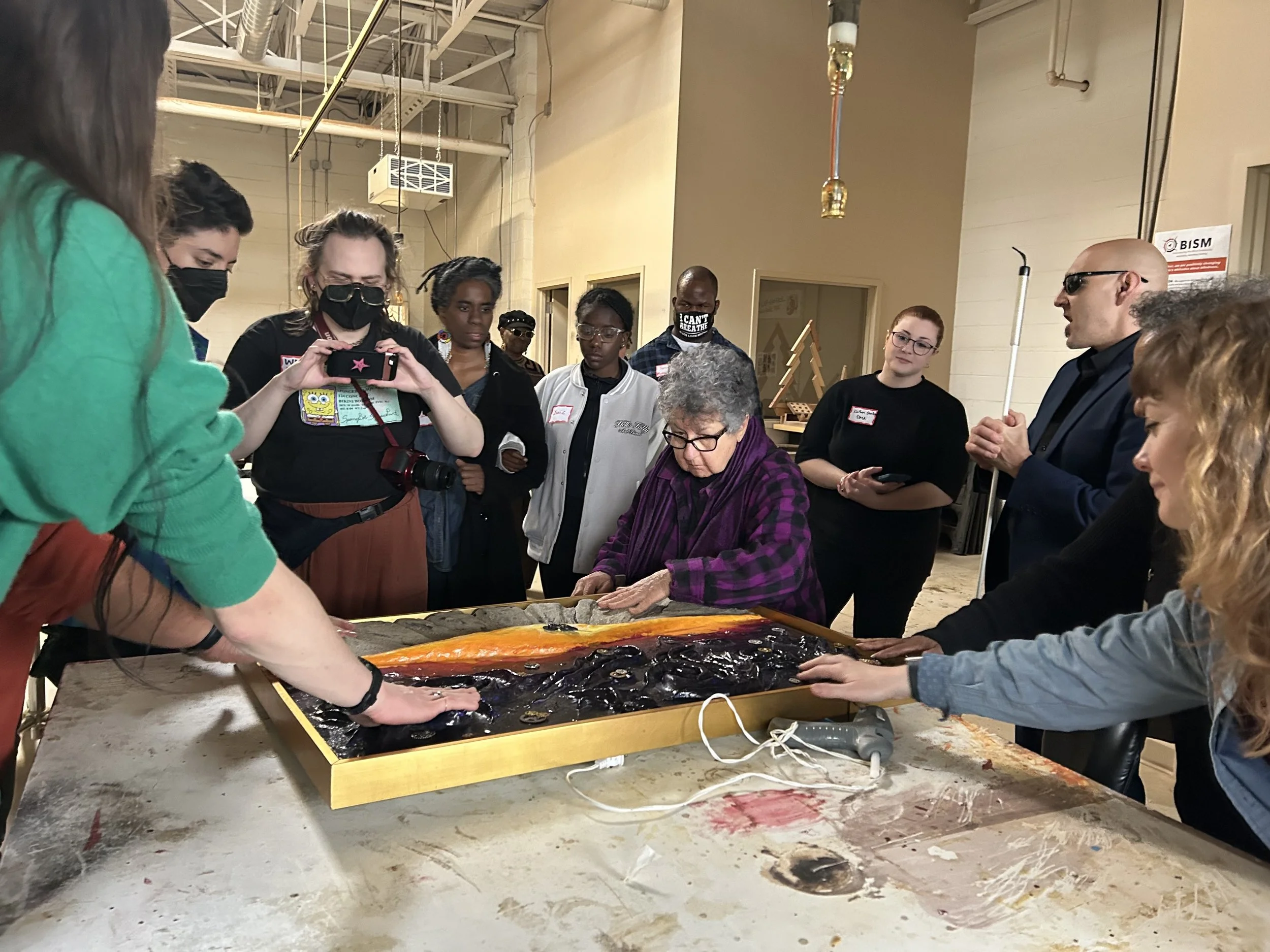
BISM(Blind Industries & Services of MD) Convening
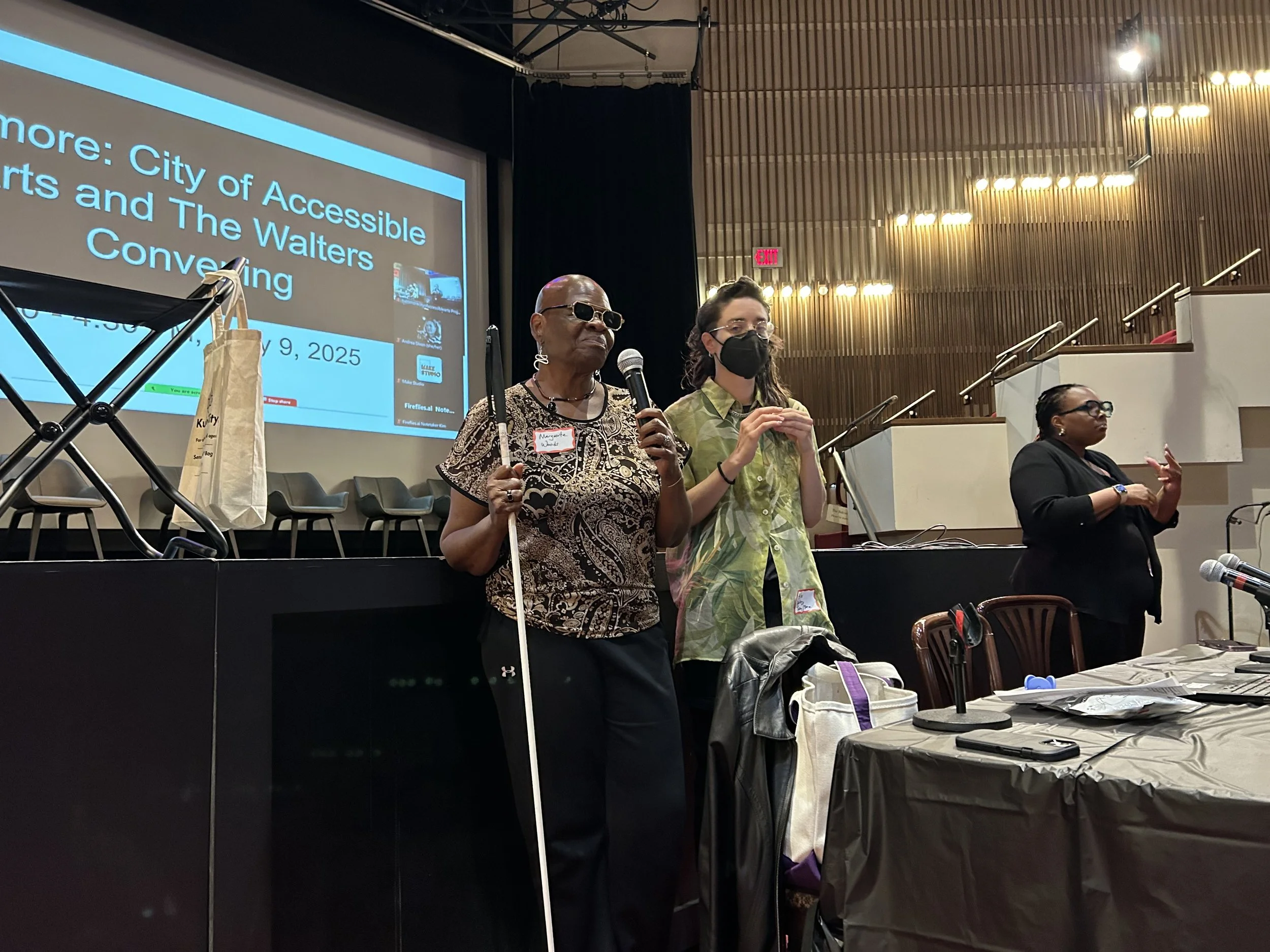
Walters Art Museum Convening
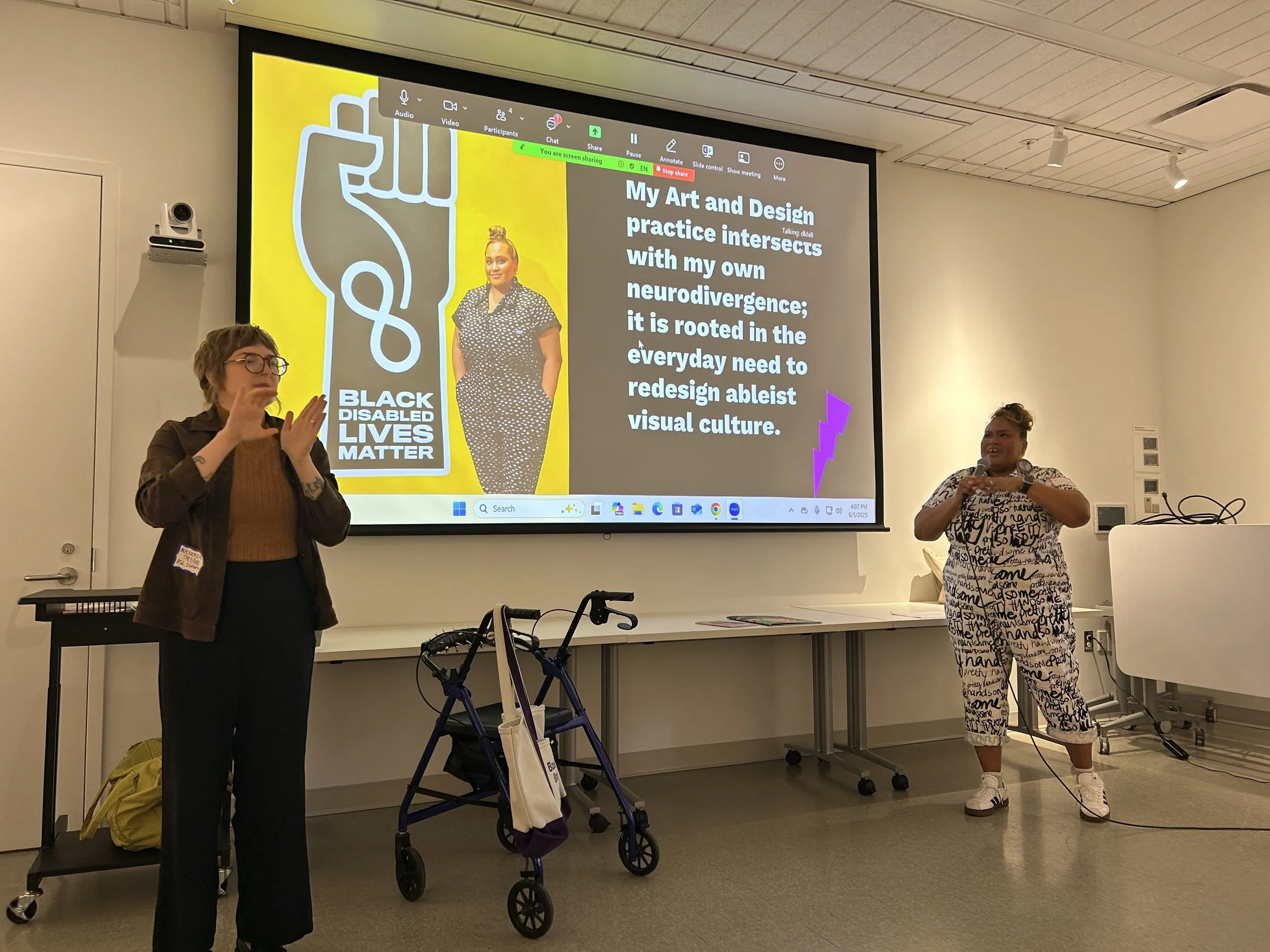
BMA Convening with artist Jen White-Johnson
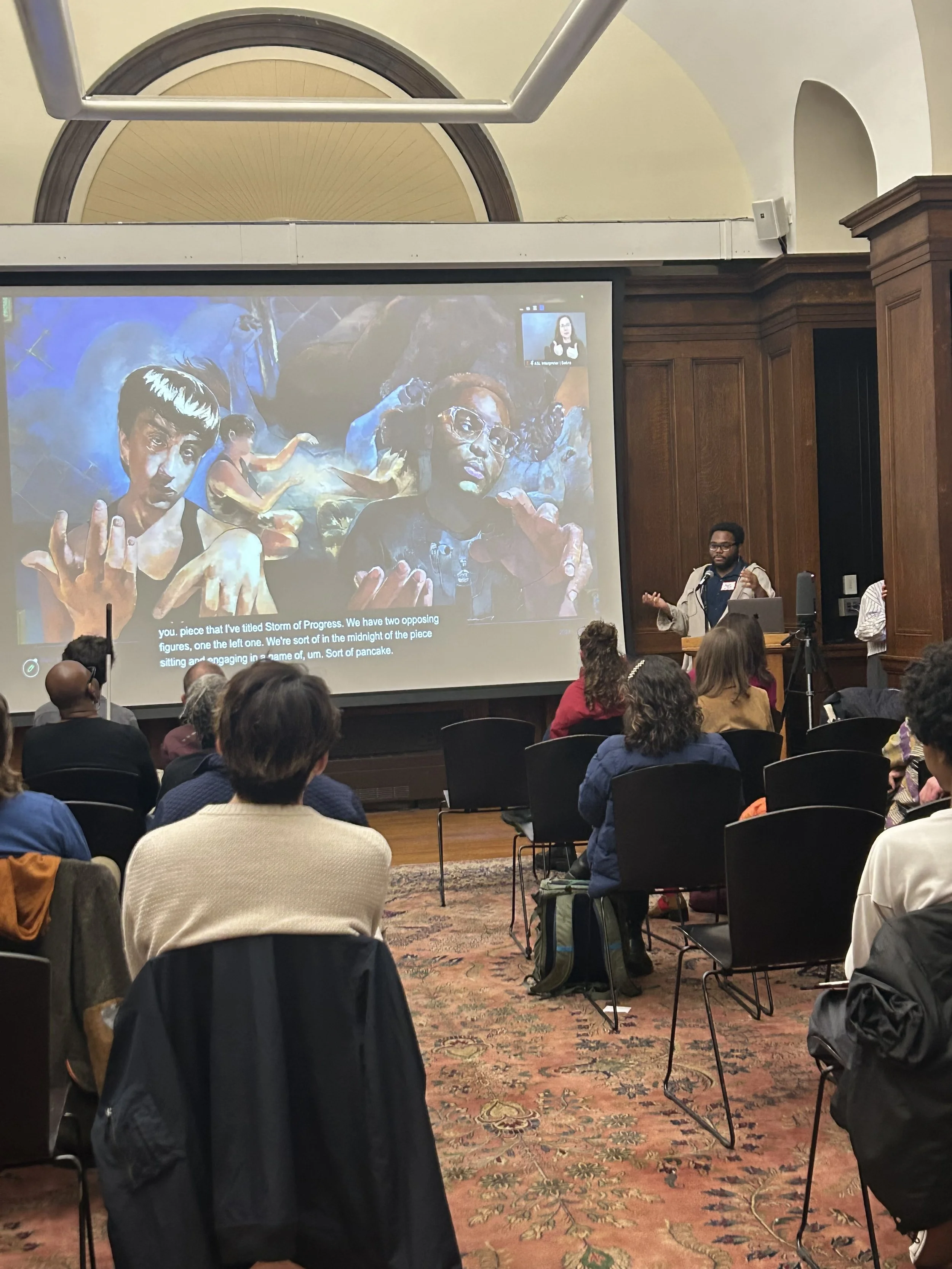
MICA Convening with artist Joseph Taylor
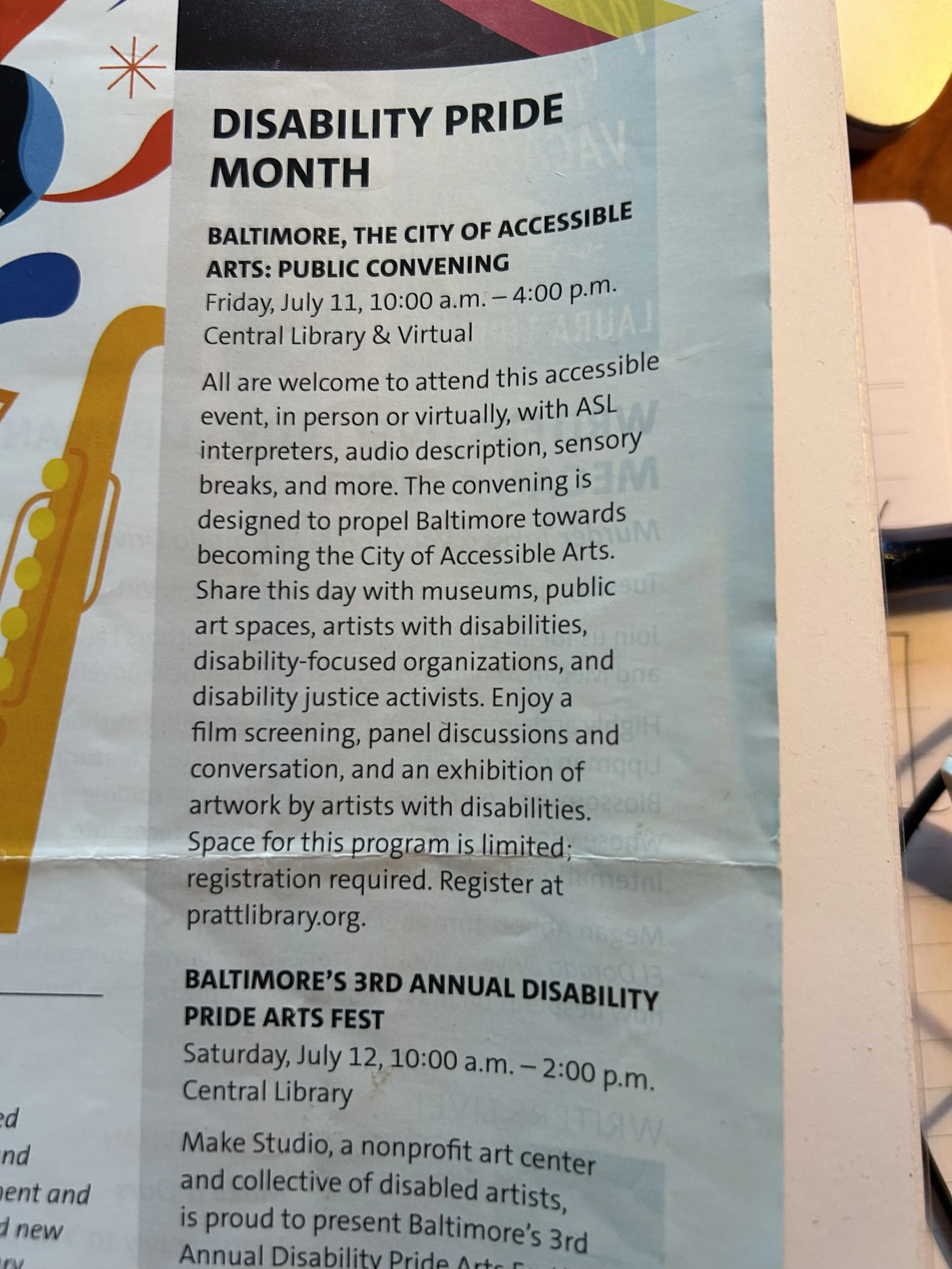
Pratt announcement of BCAA Public Convening
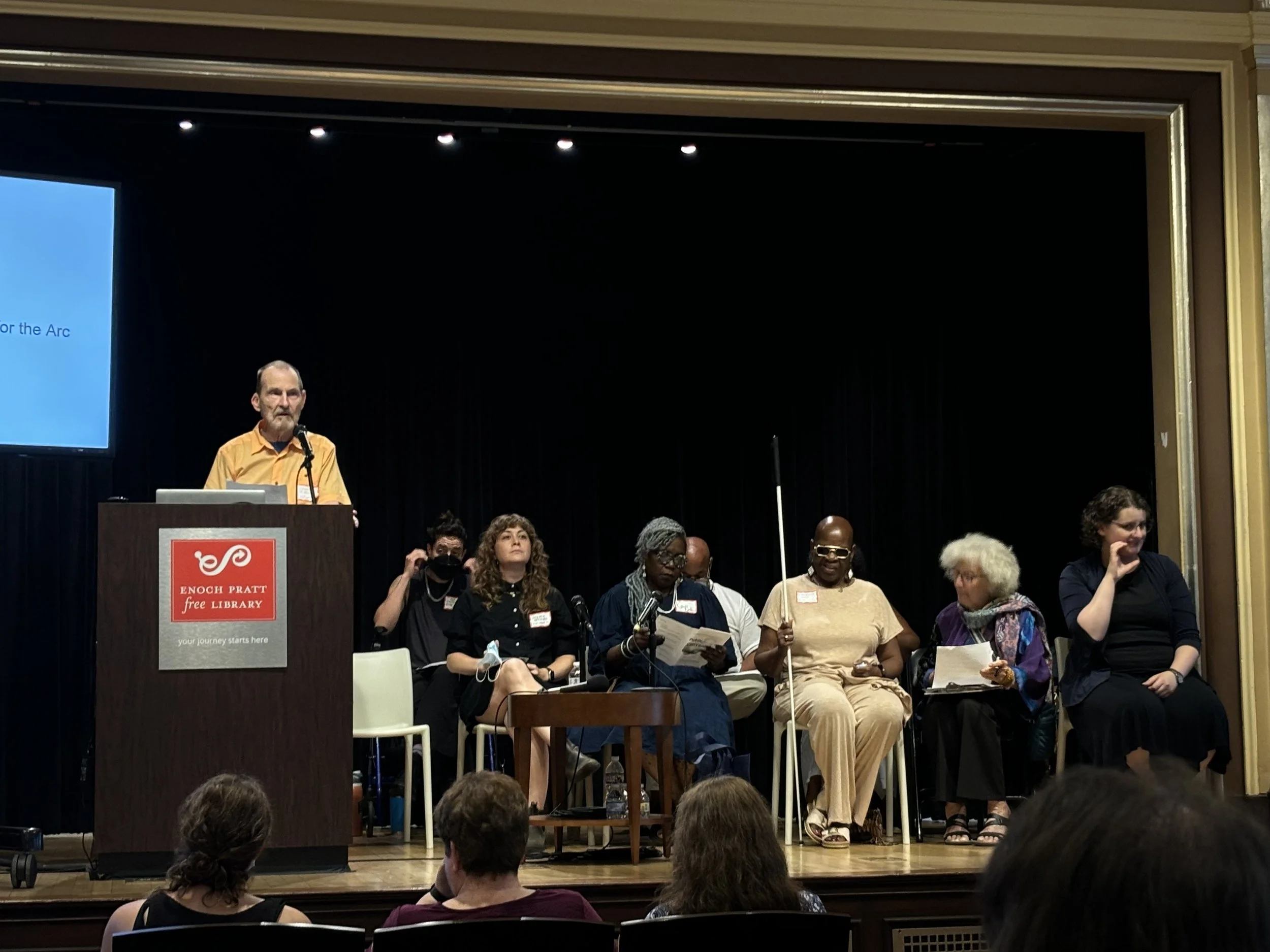
Presenters at Pratt Convening
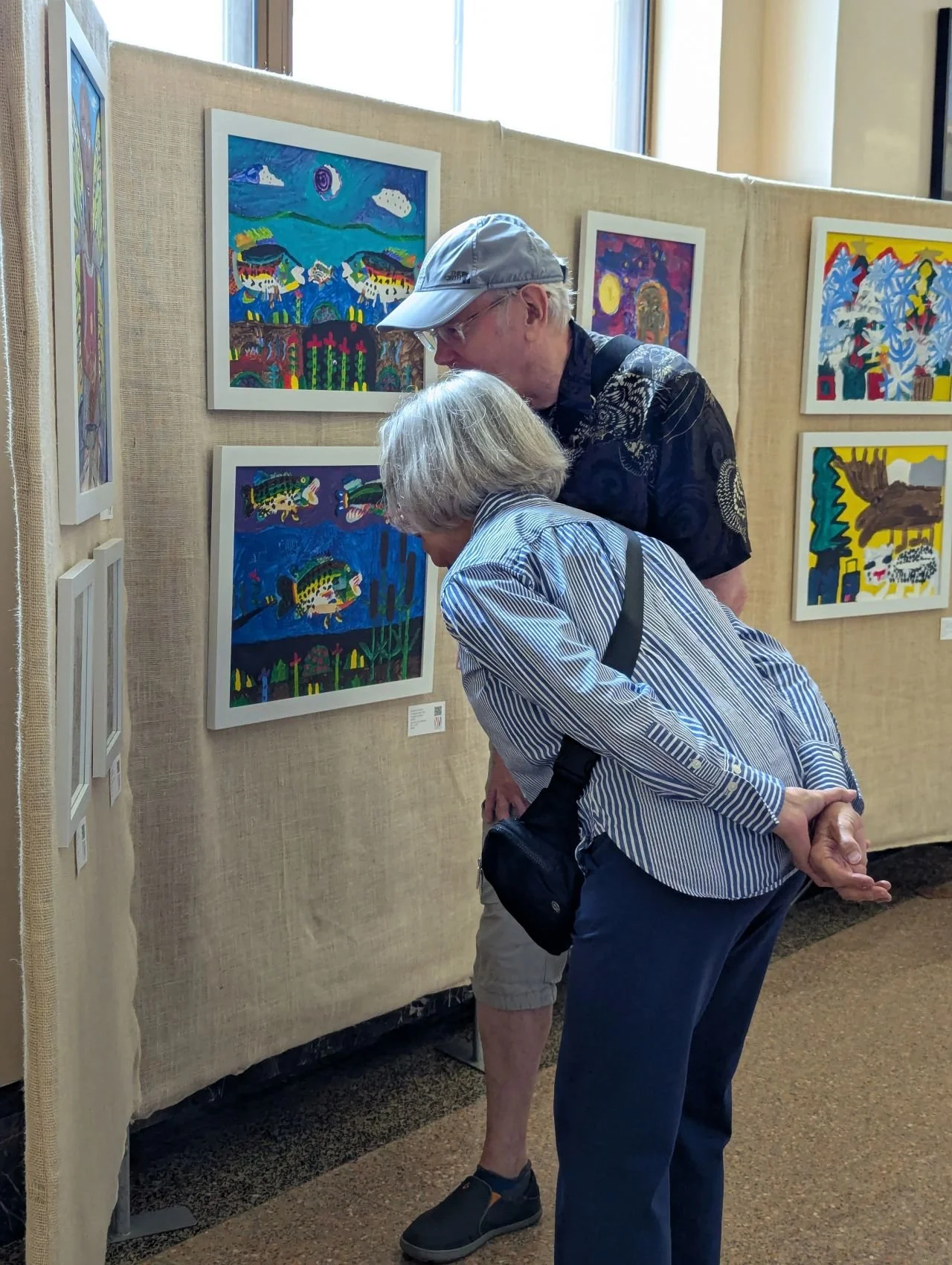
Exhibition of artists from Make Studio and VisAbility Art Lab
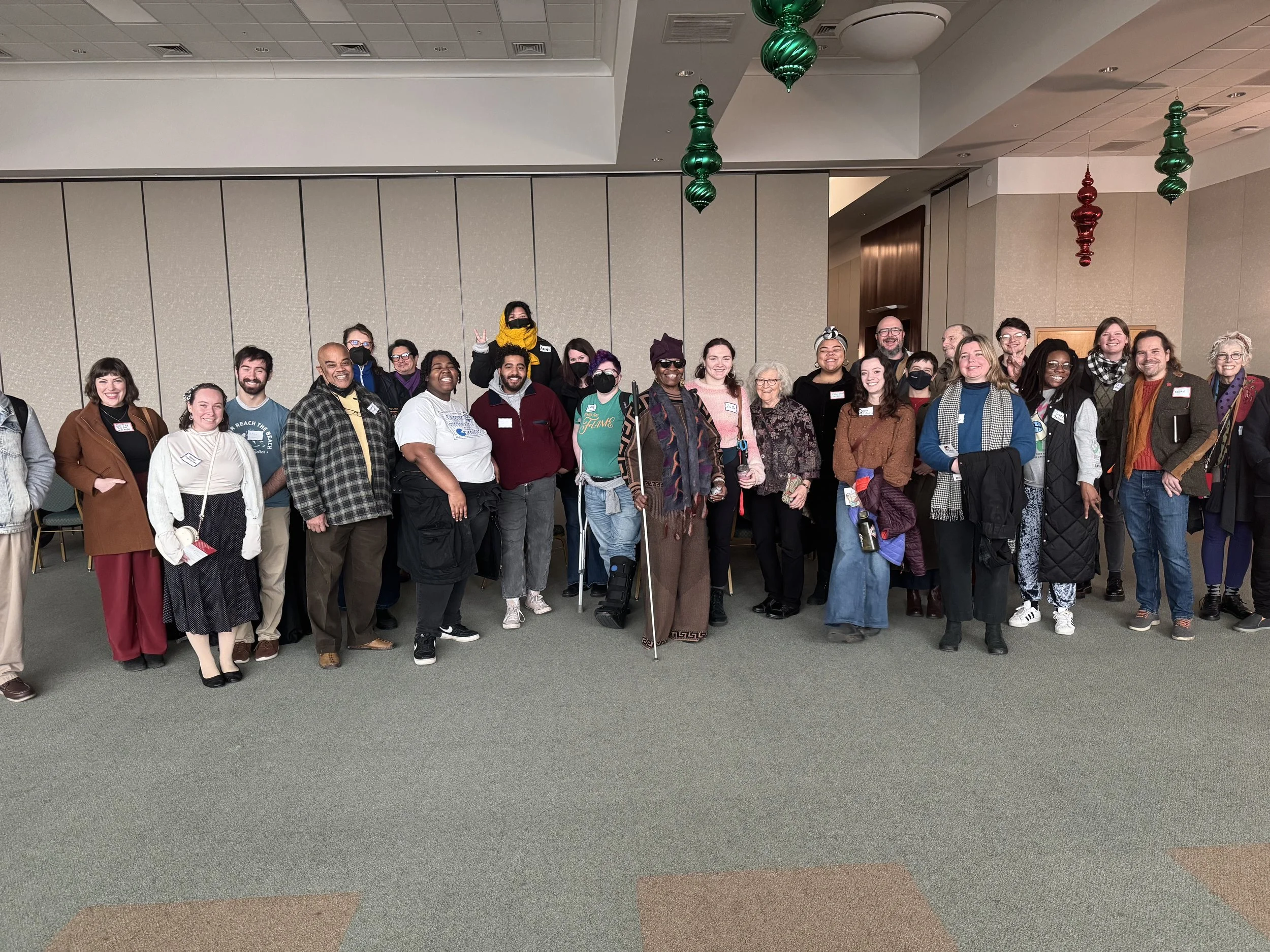
Field Trip to Center of Excellence in NonVisual Accessibility (National Federation of the Blind)
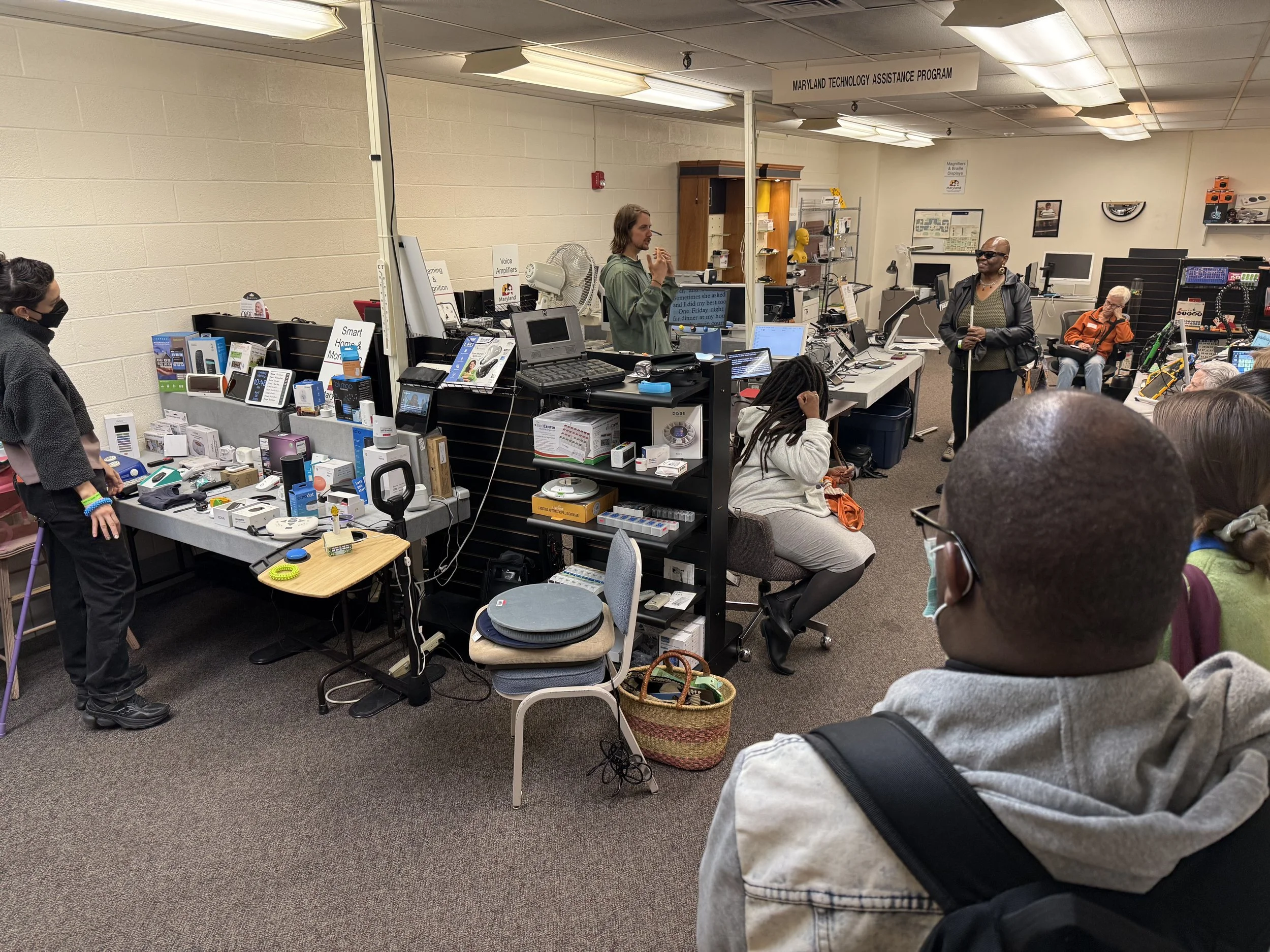
Field trip to MDTAP (MD Dept of Disabilities' Assistive Technology Program)
Baltimore: The City of Accessible Arts Feasibility Report Summary
Authored by Hannah Brancato and Alx Velozo
Baltimore: The City of Accessible Arts (BCAA) is a project that aims to transform Baltimore into a city of accessible arts. Essential to this Baltimore-based project is the creative leadership of disabled artists and community members working in close collaboration with a team of Baltimore-based disabled consultants ranging in age from 25 to 70 across race and disability. The collaboration includes disabled artists, and colleagues from museums, galleries, art spaces, and Baltimore organizations serving disabled adults and youth.
Since the summer of 2024 and continuing through fall 2025, the BCAA has hosted nine monthly access-forward convenings bringing together people of art spaces, accessibility and disability organizations, and disabled artists. These gatherings have taken place at various participating venues such as the James E. Lewis Museum of Art and Blind Industries and Services of Maryland to the Baltimore Museum of Art leading up to a large-scale public convening on July 11, 2025 at the Enoch Pratt Library. Through these monthly events, combined with Public Convening, organizing with disabled artists, fundraising, and this report, the group sought to understand whether an accessibility consortium is needed and/or wanted in Baltimore. In all, more than 300 people are documented as engaging with BCAA through the monthly events and/or Public Convening both in-person and hybrid, resulting in implementation of new access strategies in many of the arts spaces represented.
At the conclusion of the July 11 convening, a survey was completed by 57 of the approximately 295 total attendees. The survey responses revealed and affirmed that BCAA has: 1) provided necessary space for network and community building; 2) provided a space for people with a range of knowledge about disability justice to come together, teach, and learn; 3) set new standards of practice for museums by modeling accessibility best practices; 4) created needed visibility for artists with disabilities; 5) foregrounded the necessity of Black leadership and participation; and 6) established the need to compile and share information about best practices for arts accessibility. Survey respondents also overwhelmingly reported the event to be accessible.
BCAA ’s assessment that accessibility is needed in Baltimore arts spaces, exhibitions, events and activities, outcomes and future plans are expanded upon and specifically evidenced in the full feasibility study.
ON THE LEVEL INTERVIEW https://bmoreart.com/2026/09/on-the-level-george-ciscle.html
BmoreArt, Nicole Buckingham Kern, September 15, 2026
SUPPORT
To donate to the Baltimore City of Accessible Arts, please do the following:
Go to our Fiscal Sponsor, The Arc Baltimore’s website at www.thearcbaltimore.org/bcaa.
Select Baltimore City of Accessible Arts (BCAA) Project from the Gift Designation dropdown
Complete the donation form, click “Review Now,” and then click “Donate.”
Major support for BCAA in 2026 has been provided by Anonymous, The Arc Baltimore (fiscal sponsor), William G. Baker, Jr. Memorial Fund, Carol and Jerry Doctrow, Maryland Institute College of Art , Maryland State Arts Council, Randolph S. and Amalie Rothschild Memorial Fund, The Thompson-Carter Family Fund, and Friends of BCAA.